O-Rings & Lathe Cut Seals.
Cannon Gasket is an ISO 9001 certified custom O-ring manufacturer. MIL-spec, FDA, and USP Class VI grades available for regulated programs. Send the part number, AS568 dash size or custom cross-section, material, and volume. We reply with pricing, lead time, and sample options.
- Rotating shafts, reciprocating rods, piston grooves, face-flange joints. O-rings seal them all, in static and dynamic fluid and gas systems.
- Hydraulics, pneumatics, pumps, valves, medical devices, aerospace fuel systems, and pool, spa, and plumbing gear all run custom o-rings.
- Standard AS568 and custom cross-section O-rings and lathe-cut seals in Buna-N, EPDM, Viton, silicone, fluorosilicone, and PTFE.
Request a quote for custom O-rings.
What Cannon Gasket O-rings deliver
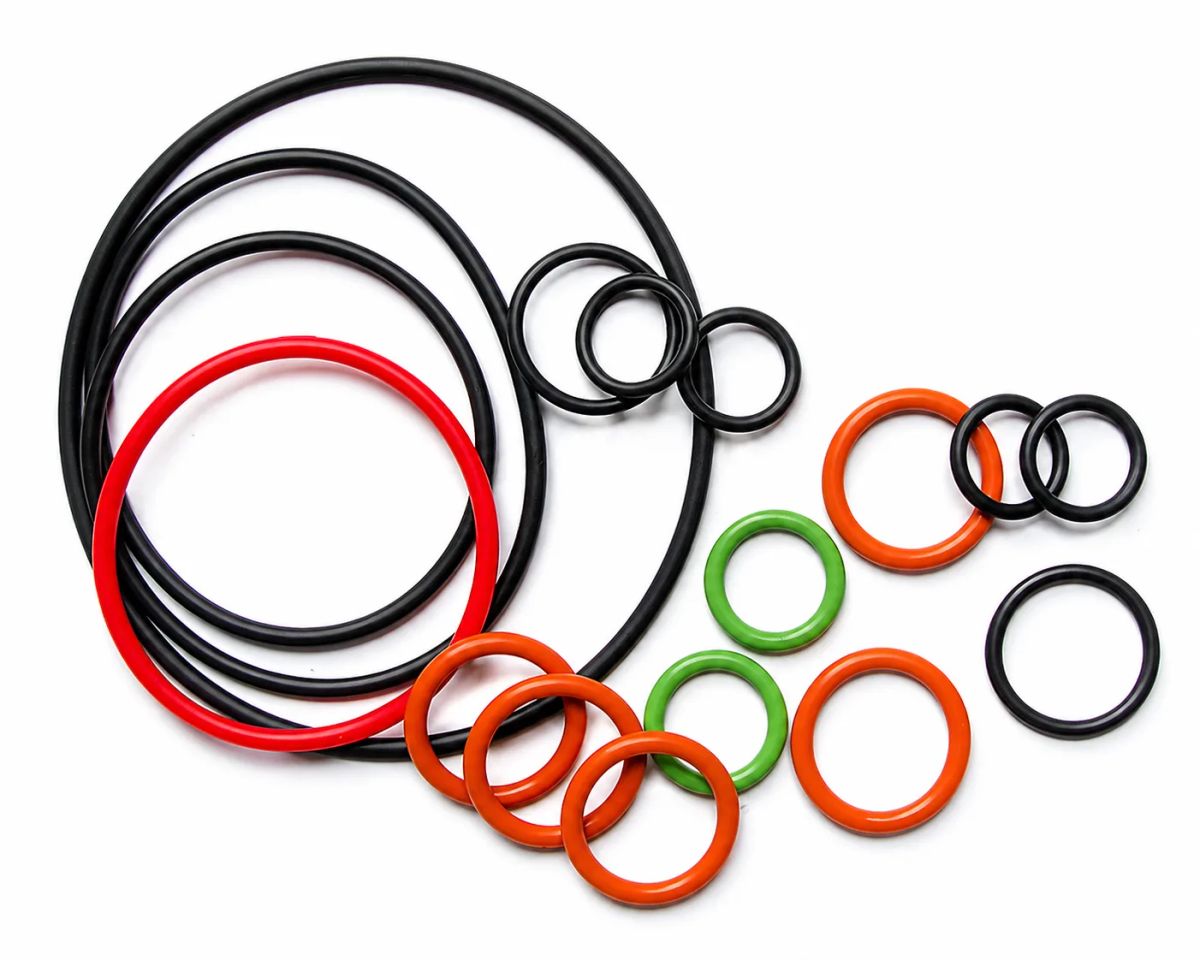
O-rings are toroidal seals used in static and dynamic sealing applications across virtually every industry. Cannon Gasket stocks and supplies rubber O-rings in various colors and durometers, from standard AS568 sizes to custom requirements, with the capability to meet your most demanding tolerances and specifications. We also produce custom-dimensioned O-rings and lathe-cut seals from tube stock to achieve precise cross-section and dimensional tolerances. Our O-rings are manufactured from all types of elastomeric materials. You can browse our AS568 O-ring size chart to view available standard sizes.
Lathe Cut vs. Molded O-Rings
Lathe-cut seals are produced by turning tube stock on a precision lathe. delivering tighter dimensional tolerances and smoother surface finish than molded O-rings in many cases. They are particularly well-suited to applications with tight groove tolerances or where mold parting lines are unacceptable.
Choosing an O-ring compound
O-ring material is determined by the application environment: fluid compatibility, temperature range, pressure, and dynamic vs. static use. We stock all major elastomers and can assist with material selection for your specific application.
O-ring compounds we supply
Viton (FKM / Fluorocarbon) O-rings
Fluorocarbon exhibits the highest level of resistance to chemicals and offers the broadest range of chemical resistance versus any other elastomeric material. Fluorocarbon exhibits a superior temperature range, is highly resistant to swelling when exposed to gasoline, and is resistant to deterioration due to exposure to UV and ozone.
Nitrile / Buna-N (NBR) O-rings
Nitrile is the most widely used elastomer in the seal industry. The popularity of nitrile is due to its excellent resistance to petroleum products, or where gasoline, oil and greases are present. Nitrile also provides excellent compression set, tear and abrasion resistance.
EPDM O-rings
A popular elastomer for outdoor applications where weather and water resistance is required. EPDM offers superior resistance to ozone, UV and sunlight. It also has good resistance to steam and brake fluid. EPDM compounds are typically developed with a sulfur or peroxide cure system. Peroxide-cured compounds are suitable for higher temperature exposure and typically have improved compression set performance.
Fluorosilicone O-rings
Used as a substitute for silicone when superior chemical resistance is required. Excellent resistance to moderate or oxidizing chemicals, ozone, aromatic chlorinated solvents and bases.
Silicone O-rings
Silicone rubber is used in a variety of industries but mainly where extreme temperature resistance is required. Silicone has an outstanding temperature range of, on average, -50 to +500 degrees F. Silicone is also used in the food and beverage industry as well as medical devices, with many FDA approved and medical grade compounds available.
Neoprene O-rings
Neoprene rubber has a wide range of beneficial properties including moderate resistance to ozone, UV, weather, water, oils, greases and solvents. Because of these properties, neoprene is a popular choice for a variety of applications.
Additional capabilities
Clean room: Cannon Gasket offers clean environment stamping to service medical, FDA, electronic and scientific applications where a controlled level of particulate is required. Cannon Gasket has the capability to meet Class 10,000.
Stocking agreements: blanket orders, VMI, JIT, Kan-Ban.
Pad printing: individual parts can be labeled for identification purposes. We have the ability to pad print your part number, identification marking or company name on each part. Various colors of ink are available. Marking is done per customer specifications or MIL-STD-130.